- In this section
- 3 pieces
- Other sections
- Growing · Food Security · Food Makers · Library
Foodways is the old word for everything around a meal: who grows the food, who cooks it, when it is eaten and what it is supposed to mean. This section uses it in that wide sense.
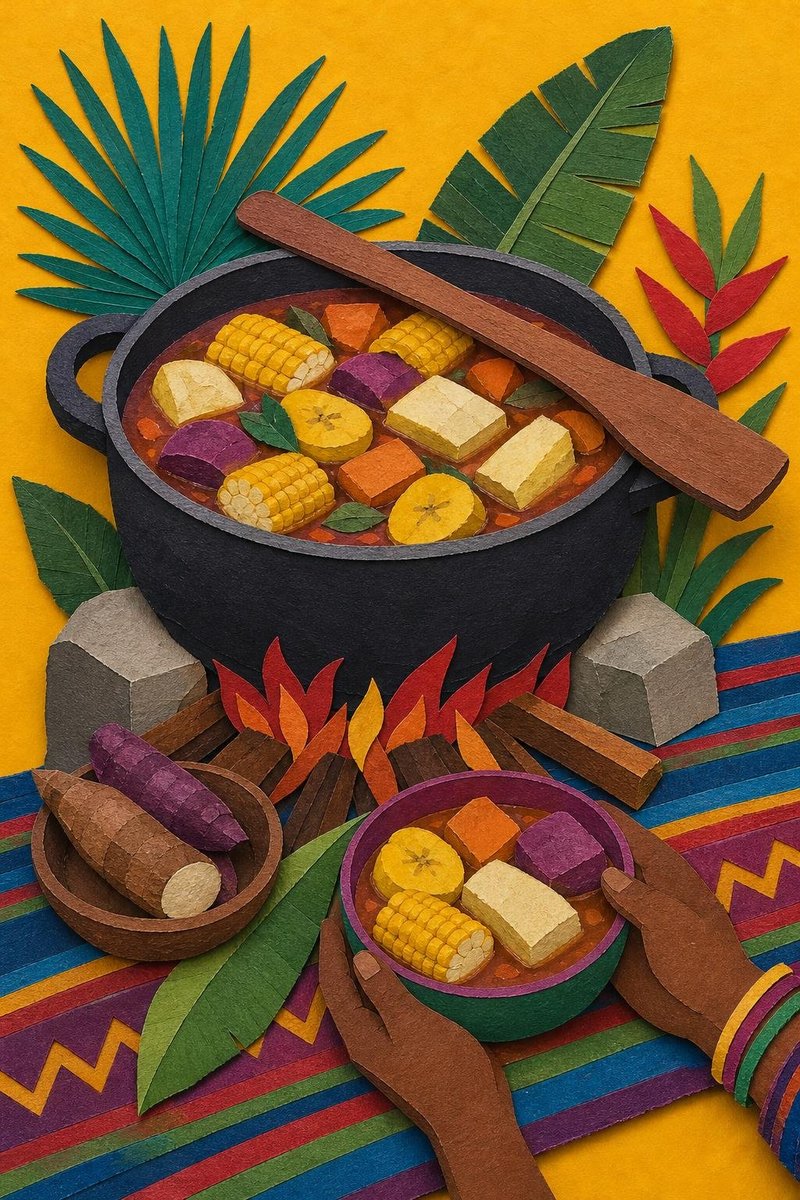
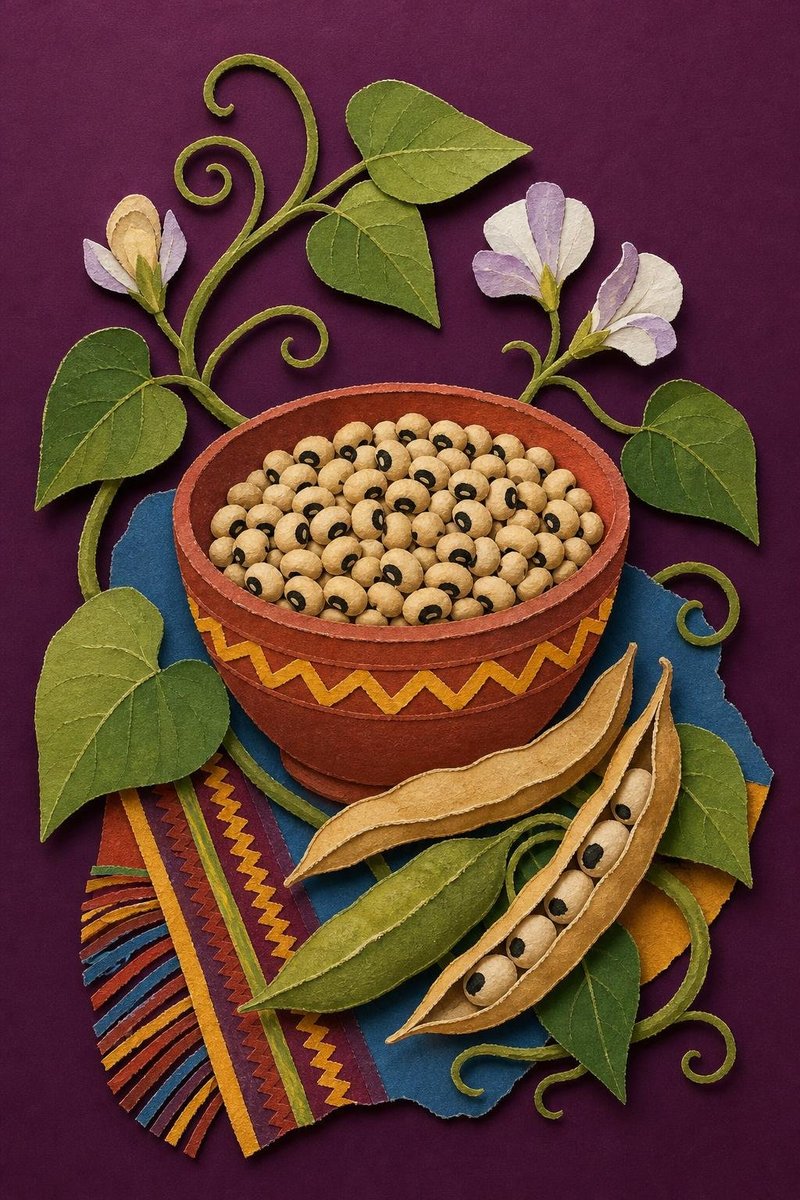
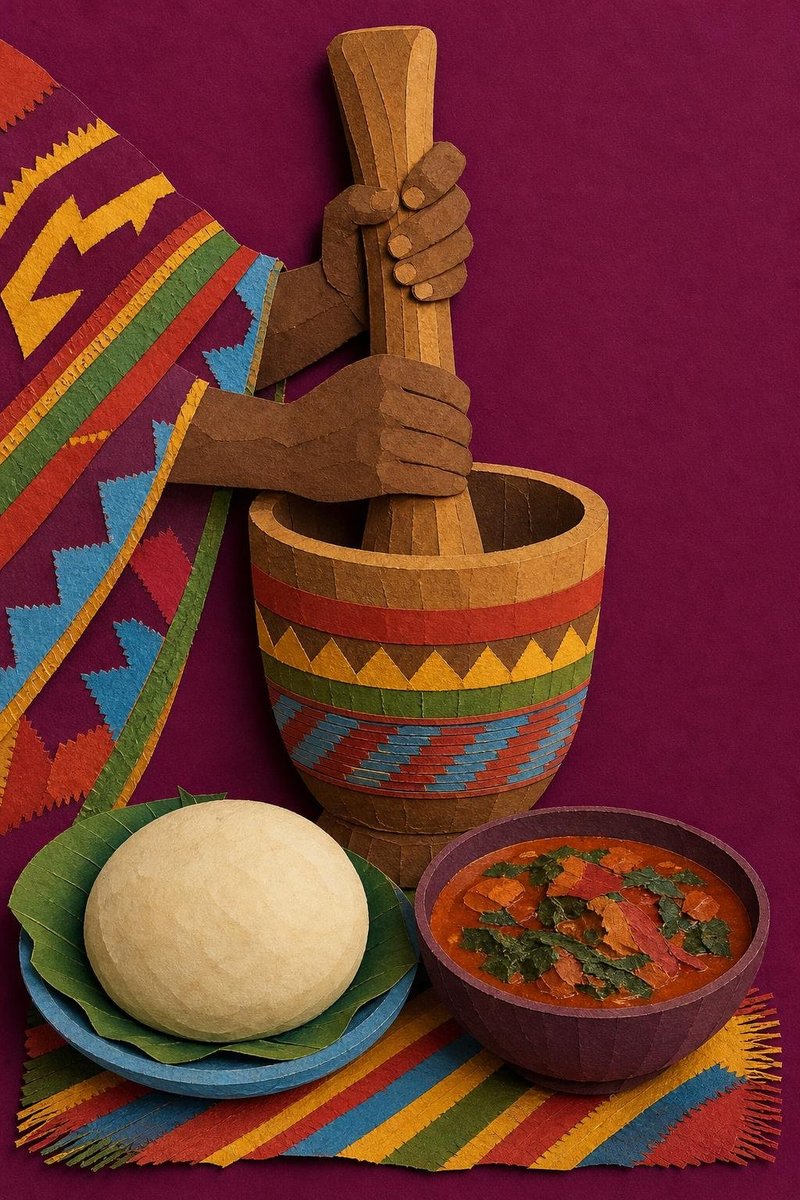
Each piece starts with one dish or one ingredient and follows it backwards. Black-eyed peas lead to the Sahel and the savannah farms of West Africa, then across the Atlantic to the Carolinas and the Caribbean. Fufu leads to the mortar and pestle and to the many ways cooks in Canada now make it from flour in a pot. Caldosa leads to eastern Cuba and to a pot big enough for a whole street.
The pieces are written for people who cook. Where a recipe helps, there is one, with ingredients you can find in Greater Victoria and notes on what to swap when you cannot.
How a dish changes when it moves
Food that crosses an ocean rarely arrives intact. The cook keeps the method and swaps the ingredients, or keeps the ingredients and drops the ceremony around them. Fufu is the clearest case: a dish built on pounding fresh cassava, yam or plantain in a mortar becomes, in an apartment in Victoria, a pot of water and a bag of flour stirred with a wooden spoon. The name stays. So does the soup it is eaten with, and the habit of eating it with the right hand.
Black-eyed peas went the other way. The bean stayed the same and the meaning around it changed, from a West African field crop to a ship's provision to the New Year dish of the American South, where it now stands for luck and coins.
Reading a recipe as a record
A recipe is also a document. The ratio of starch to meat in a Cuban caldosa says something about what was scarce in eastern Cuba in 1979. The use of smoked fish in a Ghanaian soup says something about how people kept protein before refrigeration. These pieces try to read recipes that way, without pretending that any dish has one correct version.
Where sources disagree on a date or an origin, the article says so and names both. Food history has more of those gaps than most fields, because the people who cooked were rarely the people who wrote things down.
The pantry behind the pieces
Three ingredients turn up again and again in this section, and each one has travelled further than the dishes built on it.
Cassava is a South American root. Portuguese traders brought it to the coast of West and Central Africa in the sixteenth century, and it spread inland because it tolerates poor soil and dry spells and can stay in the ground for months until it is needed. In Victoria it is sold as fresh or frozen roots in a few grocers, but far more often as gari, a fermented and toasted meal, or as the fufu flours that so many households now rely on.
Red palm oil runs the other way. The oil palm is native to West Africa, and its oil gives many stews from that region their colour and a good part of their taste. It is sold in bottles in African and Caribbean shops, and in a cool Canadian kitchen it often sets almost solid, then melts again as soon as it reaches the pot. Cooks who cannot find it sometimes use a neutral oil with paprika, which matches the colour and nothing else.
The Scotch bonnet belongs to a pepper species first domesticated in the Americas, and it carries the heat in jerk seasoning and in a great deal of Caribbean cooking. West African pepper sauces lean on chillies of the same species, grown there for centuries.
Followed this way, an ingredient list becomes a map. Much of what is called African or Caribbean food today grew out of older exchanges across the Atlantic, some forced and some traded, and the pieces in this section keep both in view.
Questions readers ask
Which dishes does the Foodways section cover?
So far the Cuban caldosa, black-eyed peas from West Africa to the American New Year table, and fufu with its Caribbean relatives such as mofongo and mangú. Each article follows one dish or ingredient back to where it started and forward to how it is cooked in Canada now. More dishes are added over time, chosen by how often they come up in kitchens around Victoria.
Are the recipes in these articles traditional?
They follow a documented traditional version where one exists and then translate quantities into what you can buy in a Canadian store. Where a substitute changes the dish, for example flour instead of freshly pounded cassava, the article says what you lose and what you keep. No single version is presented as the only correct one.
Where can I find the ingredients in Greater Victoria?
Latin American, Caribbean, African and Asian grocers carry most of them: yuca, malanga, plantain, cassava and plantain flour, palm oil, dried fish and peppers. Some supermarkets stock a few in their international aisle. Frozen peeled yuca and plantain are the easiest fallback when fresh ones are not in.
Why write about food history on a site about food security?
Because the two meet in the kitchen. A food bank parcel or a garden plan that ignores what people actually cook is less useful to them, and knowing where a dish comes from explains why a particular bean, green or flour matters so much to the people who eat it.