- Section
- Foodways
- Reading time
- 6 minutes
- Published
- September 3, 2026
- Species
- Vigna unguiculata, the cowpea
- Oldest find
- Charred cowpeas from central Ghana, about 3,400 years old
- Optimum growing temperature
- Around 30 °C
Where the history of black-eyed peas begins: a Ghanaian rock shelter
The oldest physical evidence is a handful of burnt seeds. In rock shelters in central Ghana, at sites of the farming communities archaeologists call the Kintampo culture, excavators recovered charred cowpeas about 3,400 years old, probably grown beside pearl millet. That small find anchors the history of black-eyed peas in the African continent, and it is where any account of the origin of black-eyed peas has to start.
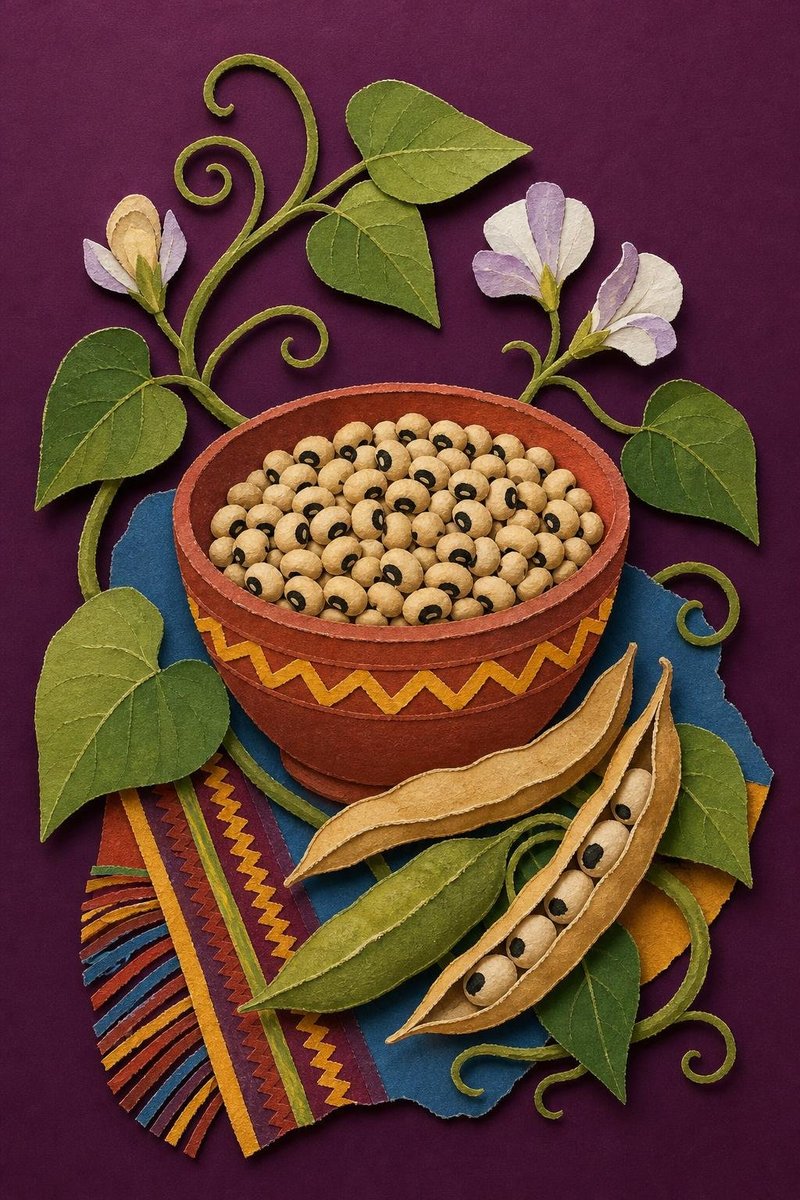
The black-eyed pea is one cultivated form of the cowpea, Vigna unguiculata, a climbing or bushy legume with long pods and seeds marked by a dark patch where they attach to the pod. The plant fixes nitrogen through its roots, survives drought better than most crops, and grows best around 30 °C. Its leaves and young pods are eaten as well as its seeds. For farmers in the Sahel and the savanna, it was close to an ideal crop: it fed people, fed livestock and left the soil richer for the next planting.
West Africa and the question of origin
For a long time botanists placed the origin of black-eyed peas, and of cowpeas in general, firmly in West Africa. The reasoning rests on diversity: the region holds the widest range of wild and cultivated forms, and wild and weedy populations there cross freely with farmed ones. More recent genetic work has pointed to East Africa as an alternative, and current reviews treat the two ideas as roughly equal. What nobody disputes is that the plant is African, and that West Africa became the place where it was most thoroughly woven into everyday cooking.
From Africa the cowpea moved east very early. Separate forms developed in India and Southeast Asia, including the yardlong bean, whose pods can grow longer than a forearm. The Greeks and Romans knew cowpeas too. But the black-eyed type, the one with the creamy seed and the dark eye, stayed closely tied to West African farming.
The Atlantic crossing
The cowpea most likely reached the Americas through the transatlantic slave trade, between the 17th and early 19th centuries. Dried beans keep for months and are easy to cook in bulk, so they were loaded as provisions on slave ships. The bean that fed people on the crossing was the same bean they planted on the other side. In provision grounds and small garden plots across the Caribbean and the American South, enslaved Africans grew crops they knew from home, and the cowpea was among them.
A food that sustained people through forced migration became, generations later, a symbol of good fortune. Both meanings belong to the history of black-eyed peas.
How a West African bean became a New Year dish
In the Lowcountry of South Carolina, where rice became a major plantation crop, black-eyed peas and rice were cooked together. Both had long been staples of West African farming. The dish became Hoppin' John, usually made with a piece of smoked pork. According to NC State Extension, enslaved people likely ate it in the days between Christmas and the New Year, though exactly how it became the New Year meal for luck is not understood.
The symbols grew around the pot anyway. The peas stand for coins, collard greens for paper money, cornbread for gold. The custom spread well beyond the Lowcountry, and a pot of peas on the first of January is now a familiar sight across the South. Even the name Hoppin' John has no settled origin; one theory traces it to a casual invitation to dinner, another to a French Caribbean word for pigeon peas.
Black-eyed peas on West African and Caribbean tables
Back in West Africa, the bean never stopped being a daily staple, and the range of dishes is wide.
- Akara: peeled beans ground with pepper and onion, beaten until airy and fried in small balls. A Yoruba dish, sold at roadside stalls across southwestern Nigeria, Benin and Togo.
- Moin moin: the same bean paste, seasoned and steamed in leaves or tins until firm.
- Ewa agoyin: beans cooked until soft enough to mash, served with a dark sauce of dried peppers and onions fried slowly in palm oil. It is Lagos street food, associated with sellers who came from Togo and Benin, and usually eaten with soft Agege bread.
- Dan wake: bean dumplings from northern Nigeria.
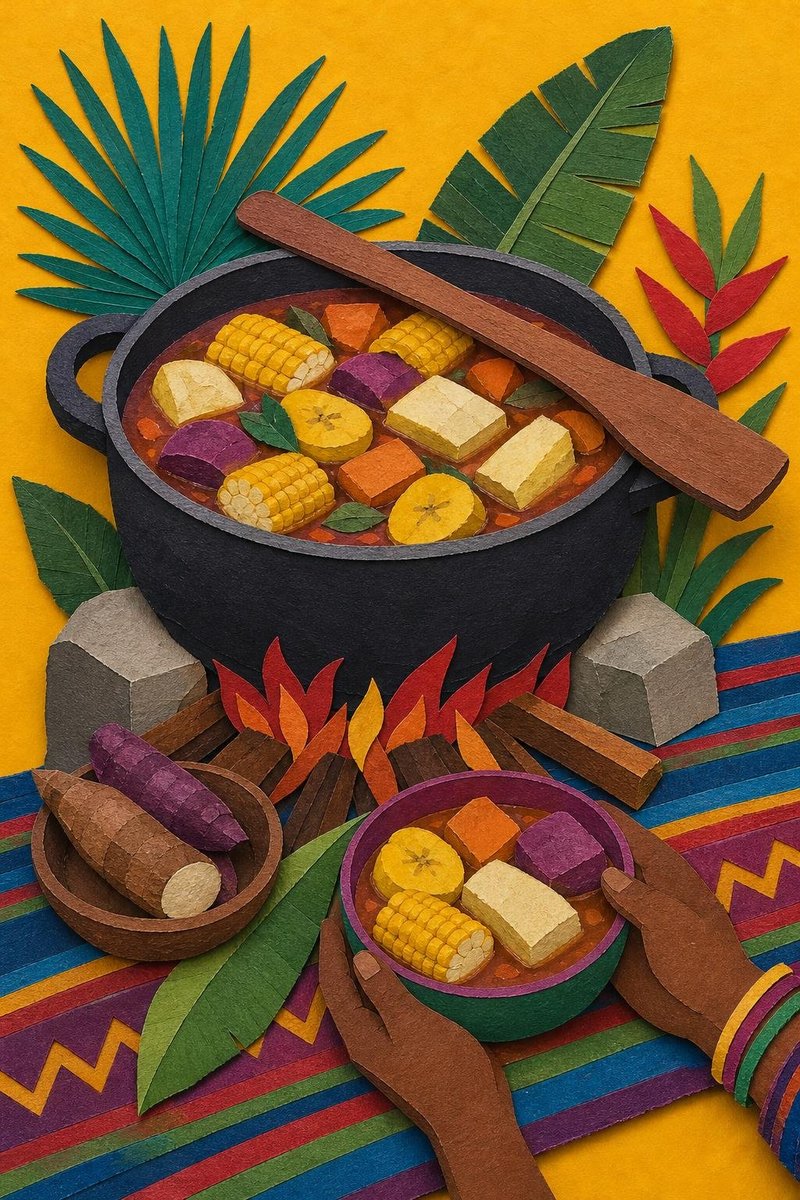
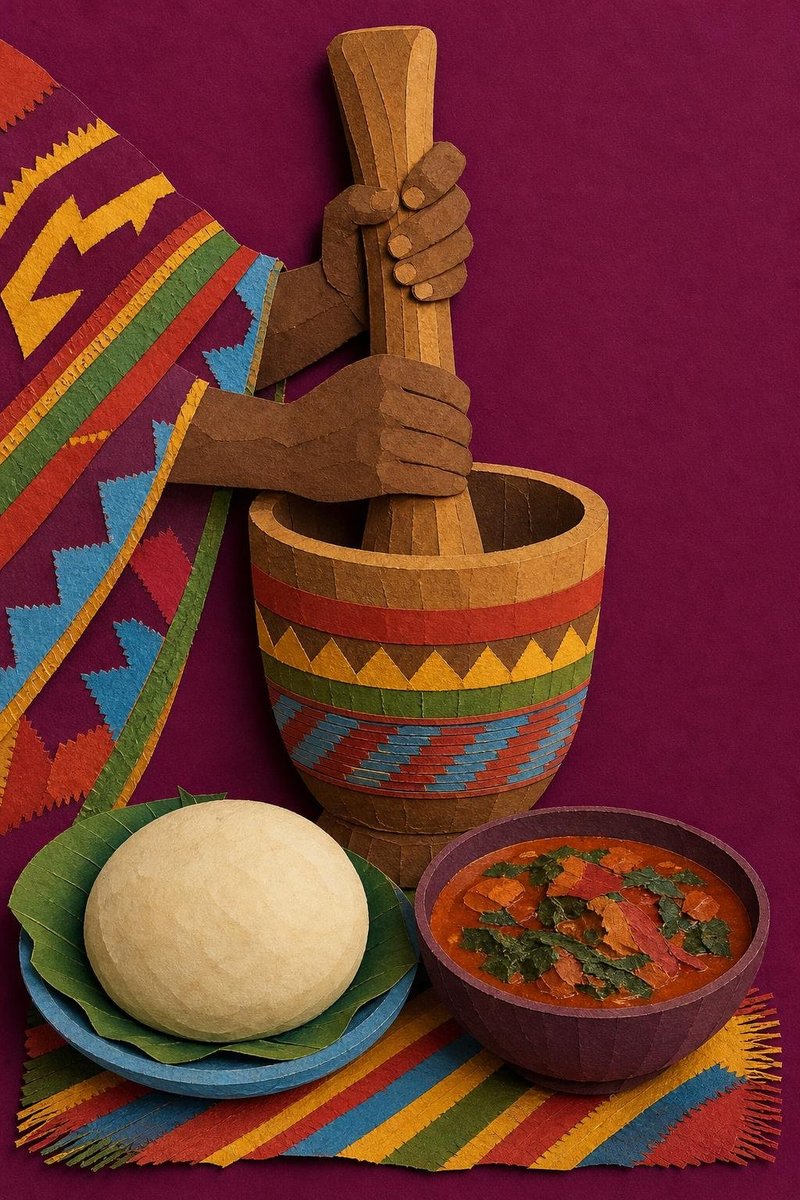
Across the Atlantic the fritter survived almost intact. In Bahia, Brazil, akara became acarajé, fried in palm oil and split to hold spicy pastes of shrimp and nuts. In Cuba the black-eyed pea fritter is called bollito, and Cuban cooks carried it to Key West, where it is still known as the bollo. Hoppin' John is a cousin of the many rice-and-bean pots of the Caribbean, and black-eyed peas also fit naturally into a Cuban caldosa or alongside fufu and a pepper soup.
Growing black-eyed peas in a cool coastal climate
A plant that thrives at 30 °C is not a natural fit for a cool maritime summer, with its cool nights and late-warming soil. Cowpeas germinate quickly in warm soil, generally above about 18 °C (65 °F), and poorly in cold, wet ground, where seed often rots before it sprouts. Over-watering in northern gardens can chill the soil further and stall the plants.
They can still be grown here, with a few adjustments.
Choose bush types with the shortest listed days to maturity; seed catalogues give ranges from about 60 days for early varieties to 100 for long-season ones. Start seeds indoors in deep pots in late spring, since the plants dislike root disturbance, and move them out only when the soil has properly warmed. A south-facing bed against a wall, black plastic laid on the soil for a couple of weeks before planting, a cloche or an unheated greenhouse all add the heat the plant is missing. If the pods are still green when the autumn rain arrives, pick them as fresh shelling peas and cook them like that; they are excellent.
Growers on the island have been testing culturally relevant crops exactly like this, alongside the African and Caribbean leafy greens that grow more easily in the same conditions. Cowpea leaves, cooked like spinach, are one more reason to keep a few plants going even in a year when the seeds never fully dry.
Save the seed from whichever plants ripen first. Over a few seasons, that is how a crop adapts to a new place, the same way farmers have shifted it since the Kintampo people. An island strain would be the newest turn in the history of black-eyed peas.