- Section
- Growing
- Reading time
- 6 minutes
- Published
- October 26, 2026
- San Basilio de Palenque
- Bolívar, Colombia, about 50 km from Cartagena
- UNESCO
- Proclaimed a Masterpiece of the Oral and Intangible Heritage, 2005
- Cassava leaves
- Never eaten raw: pound and cook thoroughly
A fence that became a town
In the foothills of the Montes de María, roughly 50 kilometres from Cartagena, sits San Basilio de Palenque. It was founded in the seventeenth century by people who had escaped slavery, and it is widely described as the first free African town in the Americas. A Spanish royal decree of 1691 recognized the freedom of its inhabitants on the condition that they stop taking in new escapees.
The word palenque meant a palisade, a wooden fence. Across colonial Colombia it came to mean the fortified settlements of people who refused enslavement. Most were destroyed. San Basilio survived, along with Palenquero, a creole language with a Spanish base, and in 2005 UNESCO proclaimed the Cultural Space of Palenque de San Basilio a Masterpiece of the Oral and Intangible Heritage of Humanity.
Food is how most visitors meet that history. In Cartagena, palenqueras, women from San Basilio in bright dresses with basins balanced on their heads, sell fruit and coconut sweets in the old city, and have become one of its best-known images. So the name "palenque greens" (also spelled Palenke) points at more than a plant list: a kitchen built by people who carried knowledge across an ocean and kept it alive behind a fence. The leaves below come from that wider African and Caribbean kitchen, not from a Colombian recipe book.
The leaves that travel
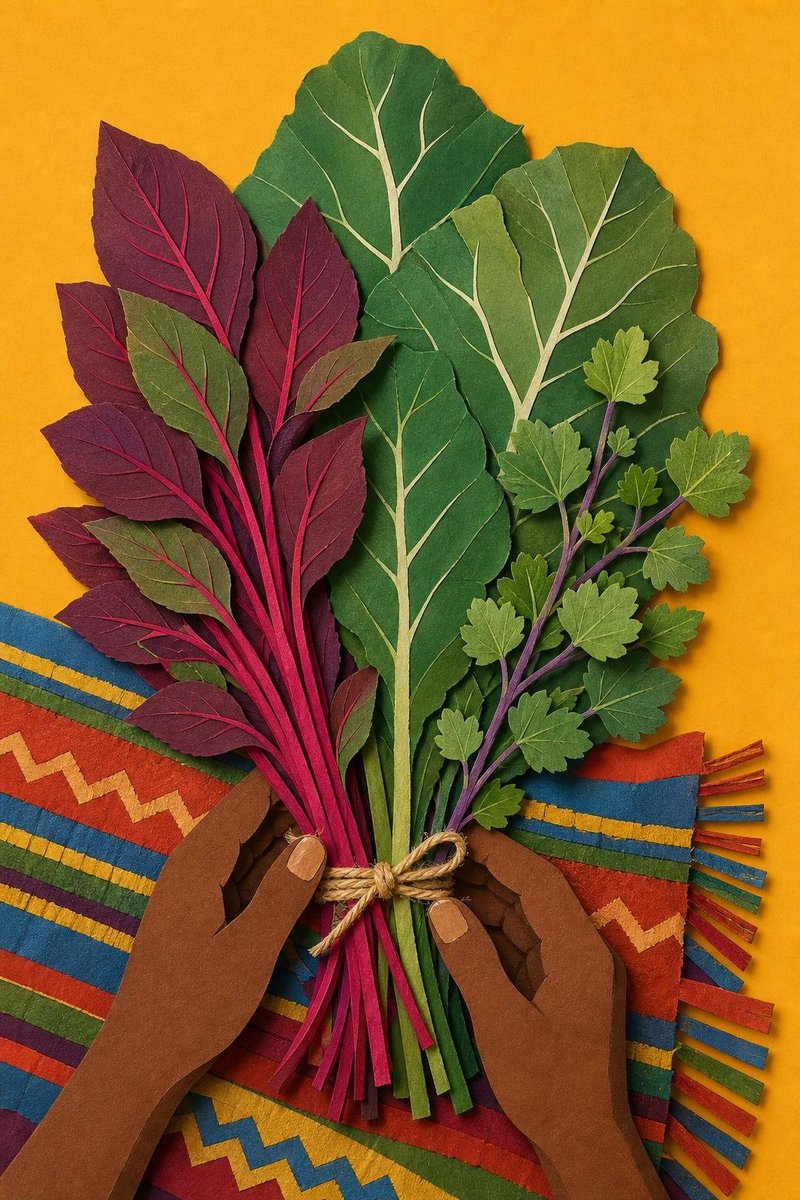
The greens below show up, under different names, from the Gulf of Guinea to the Caribbean coast of South America. All of them can be grown, or at least approached, on Vancouver Island.
Amaranth (callaloo, efo tete, African spinach)
Green amaranth is the leaf a Jamaican cook means by callaloo. In southwestern Nigeria the same genus, mostly Amaranthus hybridus, is called efo tete and often sold in English as African spinach, although it is not related to spinach. It goes into efo riro, the Yoruba stew of greens, peppers and palm oil.
On the island amaranth is the most reliable of the warm-weather greens. Sow indoors in April, plant out once nights have warmed, usually late May or June, and start cutting when plants are knee-high. Pinching out flower heads keeps the leaves tender. A few plants left to flower give seed for next year.
Jute mallow (ewedu, crain-crain, molokhia)
Corchorus olitorius is a fibre plant in some places and a soup in others. Yoruba cooks call it ewedu; in Sierra Leone it is crain-crain; Egyptians cook it as molokhia. Its leaves turn silky and thick when simmered.
It likes heat, but it is a short-day plant, so long northern summers keep it making leaves. A warm, sheltered bed or a cold frame works. Seed sometimes germinates unevenly; soaking it in hot water before sowing helps.
Sweet potato leaves
Sweet potato leaves are the most underrated green on this list. In Sierra Leone they are one of the plasas, the cooked leaf sauces of West Africa; in Congo they become matembele. The tips are mild, and young leaves cook down in minutes.
Grow slips from a firm tuber in a warm, bright spot from late winter, then plant them into warm soil under black plastic or in a greenhouse bed. On the island the tubers may stay small. The leaves will not.
Collards
Collards belong to the same family as kale and need no persuasion to grow here. They are the backbone of African American greens cooking in the US South, and in Kenya and Tanzania they are sukuma wiki, sautéed with onion and eaten with ugali. Plant in late summer and you will be picking through the winter; many cooks think a frost improves them.
Cassava leaves, as a cooking reference
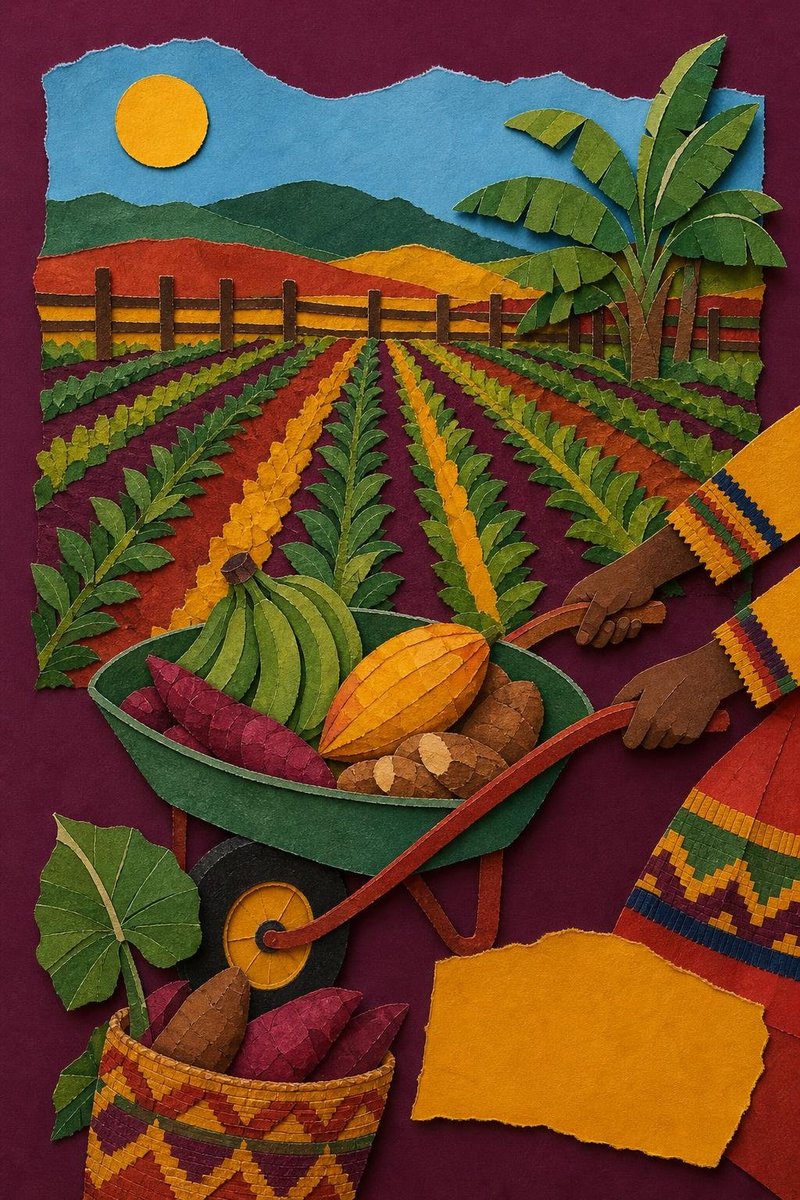
Cassava will not grow outdoors here, and that is fine, because frozen pounded cassava leaves are sold in African grocery shops. They are worth understanding all the same. Raw cassava leaves contain cyanogenic glycosides. Pounding the leaves breaks the cells so the compounds break down, and boiling finishes the job; that is the logic behind Congolese pondu and its long simmer. Treat frozen leaves the same way: cook them thoroughly.
Growing greens in sacks and small spaces
Many people who want these greens have a balcony, not a field. Sack gardens, tall bags of soil planted on the top and through slits in the sides, are well documented in Nairobi's Kibera, where households grow kale and other greens on very little ground, and they suit amaranth and sweet potato vines well. On the island they also warm up faster than open soil in spring, a real advantage for heat lovers. Keep them watered: a sack in full sun dries out in a single hot afternoon.
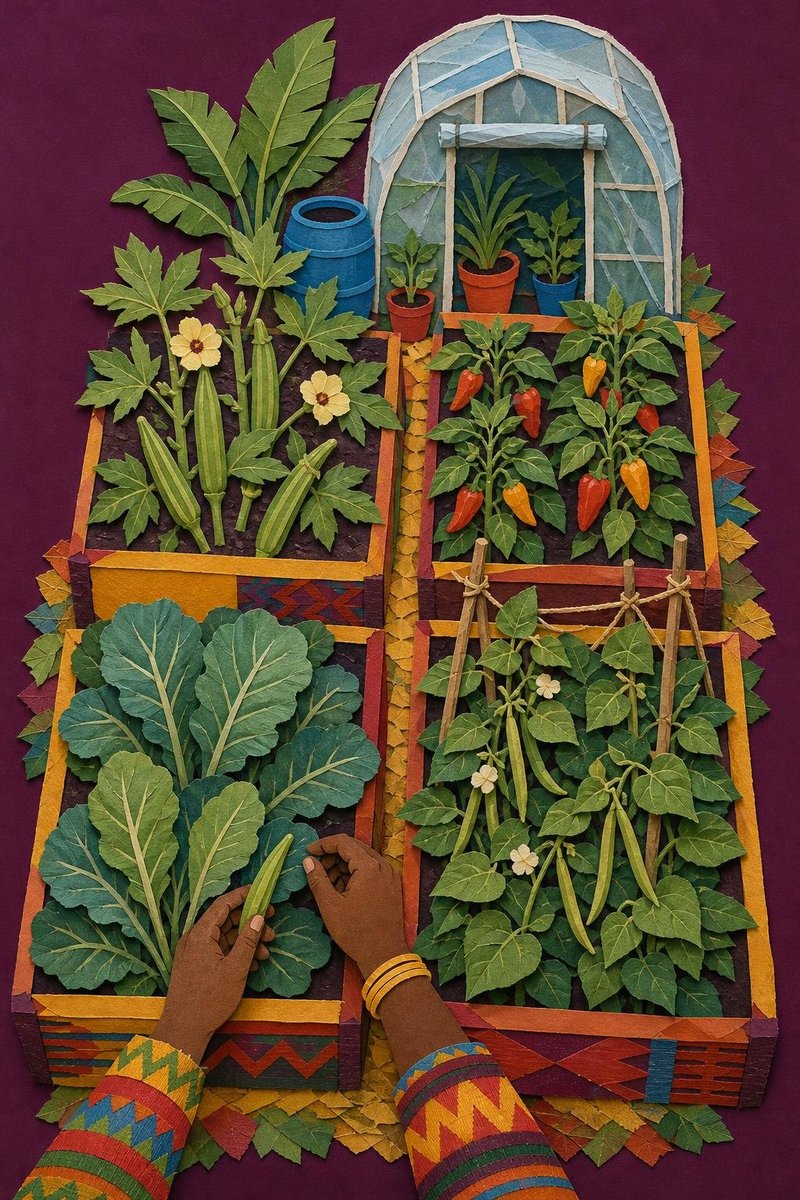
For the bigger picture of which diaspora crops suit the island's climate, including okra, peppers and garden eggs that need a greenhouse, see the guide to culturally relevant crops on Vancouver Island.
In the pot
Each leaf behaves differently once it hits heat, and that shapes the dish.
| Green | Texture when cooked | Typical use |
|---|---|---|
| Amaranth | Soft, slightly earthy | Steamed Jamaican callaloo; efo riro |
| Jute mallow | Silky, thick, mucilaginous | Ewedu soup with amala; crain-crain stews |
| Sweet potato leaves | Tender, mild | Plasas and matembele with palm oil or peanut |
| Collards | Firm, holds shape | Long-simmered pot greens; sukuma wiki |
| Cassava leaves | Dense, needs long cooking | Pondu, saka-saka, Sierra Leonean cassava leaf stew |
Ewedu is the one that surprises newcomers. The cooked leaves are beaten or blended until the soup pulls from the spoon in strands, then eaten with amala alongside gbegiri, a soup of black-eyed beans. If the beans interest you, the history of black-eyed peas follows them from West Africa into the Americas, and the fufu chronicles look at the swallows these greens are eaten with.
Amaranth and sweet potato leaves are more forgiving. A Jamaican-style pot of callaloo takes about ten minutes once the leaves are washed: garlic and onion softened in oil, chopped tomato, the greens, a whole Scotch bonnet left in for perfume and fished out before it bursts, and a splash of water to steam. Efo riro builds the other way, from a base of blended peppers fried down in palm oil, with the greens folded in near the end so they keep some colour. Both work with island-grown amaranth. Strip the leaves from tough stems, chop, and wilt them with onion, tomato, a little hot pepper and oil until just tender. Collards want the opposite: time, a smoky element and enough liquid to make pot likker.
One way to judge a variety: if you can cut a colander of leaves every week from July to September from three or four plants, the variety suits your site. If not, try a different seed source next spring, ideally one saved by a local grower.